Monobloc or Split Heat Pump? Choosing for a Bristol Home
Last reviewed: 2 October 2026
Most UK homes get a monobloc heat pump, but a split system can solve some Bristol problems — long pipe runs from a hillside garden, a small outdoor footprint, or a listed building. Here's how they differ and how to choose.
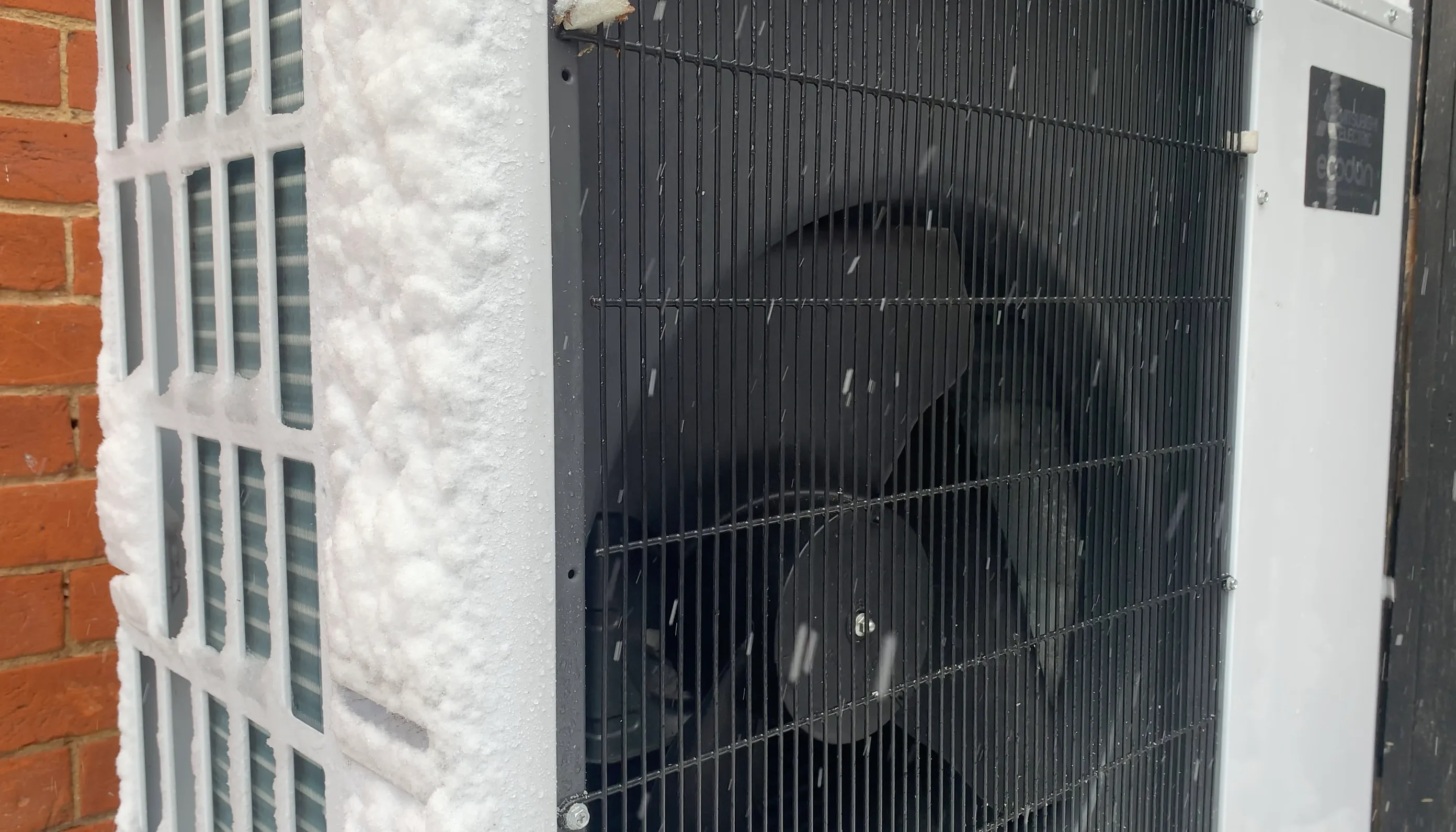
The difference in one line
In a monobloc, everything that handles refrigerant is in the outdoor unit and only water pipes come into the house. In a split, refrigerant pipes run from a smaller outdoor unit to an indoor unit, where the heat passes to your heating water.
Monobloc: the usual choice
How it works: the outdoor unit collects heat and warms your heating water inside the box. Insulated water pipes carry it into the house.
Pros
- Refrigerant stays in a factory-sealed unit, so installation needs no refrigerant work on site
- Simpler and usually cheaper to install
- Works with natural refrigerant R290 (propane), which runs efficiently at higher water temperatures — useful in Bristol’s solid-walled period homes
- Less equipment inside the house
Cons
- A larger outdoor unit
- Water pipes outside need frost protection (anti-freeze valves or glycol)
- The unit should be reasonably close to the house to limit heat loss from outdoor pipe runs
Split: the specialist option
How it works: the outdoor unit circulates refrigerant through copper pipes to an indoor unit (sometimes called a hydrobox), which heats the water.
Pros
- A smaller, lighter outdoor unit
- No water outside, so no frost risk to pipework
- Refrigerant lines can run further, letting the outdoor unit sit away from the house
Cons
- Needs an F-Gas certified engineer to connect the refrigerant lines on site
- An indoor unit takes space, as well as the cylinder
- Usually uses R32 refrigerant rather than R290
- Often more expensive to install
When a split might suit a Bristol home
- Hillside gardens. In Totterdown, Windmill Hill or Clifton Wood, the only level spot may be at the far end of a steep garden. A split’s refrigerant lines can cover that distance more efficiently than long outdoor water pipes.
- Tight or visible spaces. A smaller outdoor unit is easier to tuck into a lightwell or courtyard in a Clifton or Kingsdown townhouse, and easier for a conservation officer to accept.
- Listed buildings. Narrow refrigerant lines can be easier to route sensitively than larger water pipes — though every case needs listed building consent.
For most interwar semis and Victorian terraces with a back garden, a monobloc is simpler and cheaper.
Does the grant cover both?
Yes. Both are air-to-water heat pumps and qualify for the £7,500 Boiler Upgrade Scheme grant with an MCS-certified installer. Air-to-air systems, which blow warm air and don’t heat water, are a different category with a £2,500 grant.
Questions for your installer
- Which type do you recommend for my home, and why?
- How far will the outdoor unit be from the house, and how are the pipes protected from frost?
- If split, is your engineer F-Gas certified?
Related: what an air source heat pump is · planning permission in Bristol
See what a heat pump would look like in your Bristol home
The mechanism is the same in every UK home; the design is specific to yours. Our team carries out a free in-home survey including a full room-by-room heat-loss calculation, identifies the system size and configuration that fits your property, and provides a written quote with the £7,500 BUS grant already deducted.
You'll see the actual figure you'd pay — not an estimate — and the projected efficiency for your specific install.