Heat Pumps Across Bristol: Area Guides
Eight neighbourhood guides covering Bristol and its edges. Each explains the local homes, conservation areas and planning authority, and what they mean for fitting a heat pump.
Last reviewed: 2 October 2026
-
Three councils
Bristol City Council for most of the city, South Gloucestershire for Thornbury and North Somerset for Long Ashton — each with its own planning team.
-
33 conservation areas
cover around 30% of Bristol, so where the outdoor unit goes matters more here than in most cities.
-
Same grant everywhere
the £7,500 Boiler Upgrade Scheme applies in every area, or £9,000 for homes replacing oil or LPG.
Choose your area
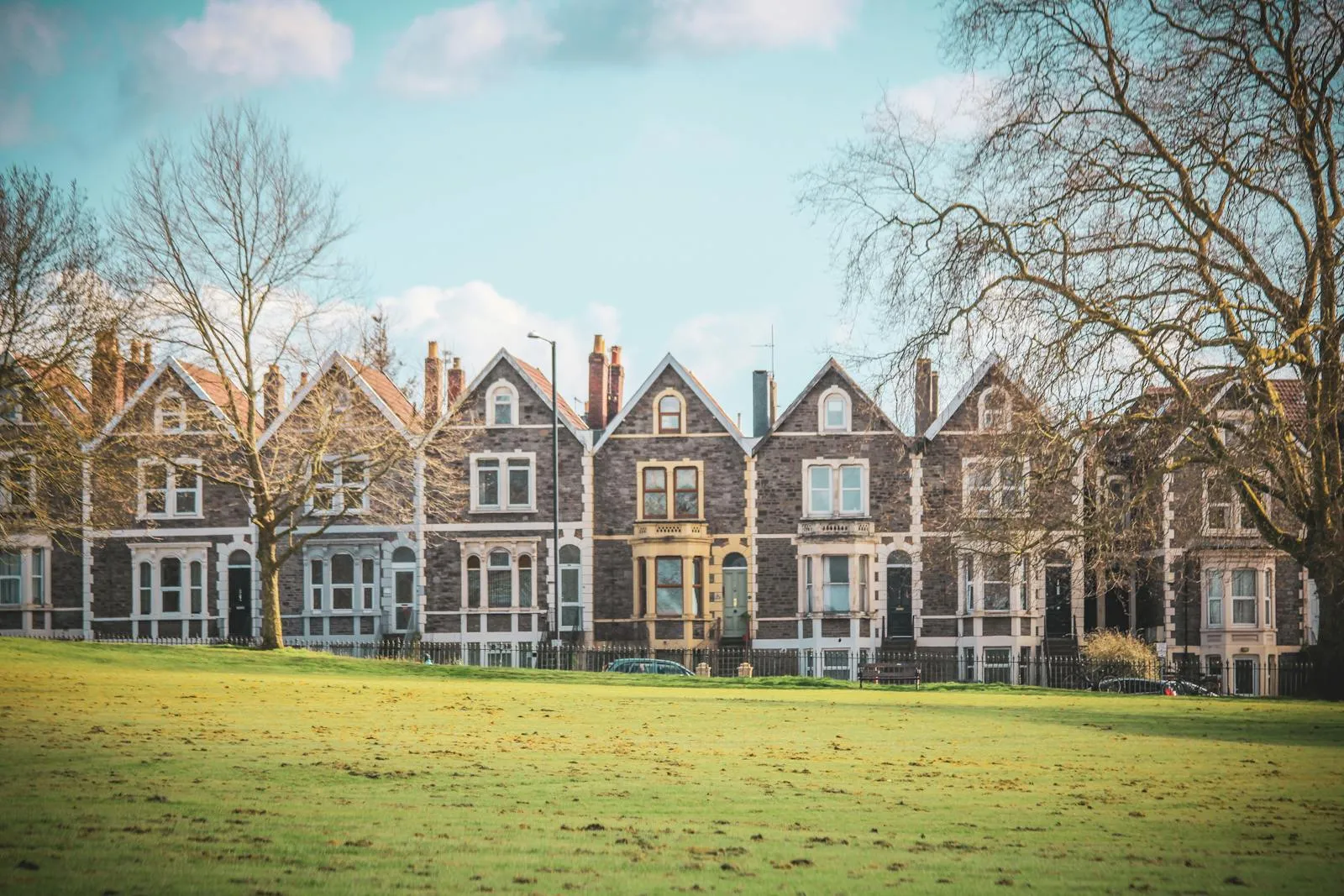
Bristol's neighbourhoods were built in very different eras: Georgian Clifton on the edge of the Avon Gorge, Victorian Cotham and Redland on the hills to the north, interwar suburbs around Westbury-on-Trym and Sneyd Park, and Victorian terraces south of the river in Bedminster. Beyond the city, Thornbury and Long Ashton each have historic cores and modern estates.
The age and construction of a home shapes its heat pump design more than anything else. A 1930s semi in Westbury-on-Trym is usually a straightforward job; a listed Georgian townhouse in Clifton needs consent, careful siting and larger radiators. Each guide below explains the local picture.
Clifton
BS8, Bristol UA. Georgian terraces and Victorian townhouses defining Bristol's premier heritage suburb. Clifton CA designated 1972 — solid-wall insulation prerequisites and careful outdoor unit siting are common considerations on principal elevations.
Heat pumps in Clifton →Redland
BS6, Bristol UA. Late Victorian and Edwardian villas (1880s–1920s) with tree-lined streets and larger gardens. Inside the Cotham & Redland CA (1981) — spacious plots typically simplify outdoor unit positioning; period radiators need a flow-temperature review.
Heat pumps in Redland →Cotham
BS6, Bristol UA. Dense Victorian urban townscape (1860s–1910) in Pennant stone, sharing the 1981 CA with Redland. 144 listed buildings at ward level — heritage planning is the binding design constraint on many streets.
Heat pumps in Cotham →Westbury-on-Trym
BS9/BS10, Bristol UA. Medieval village core and 1920s–1930s suburban semis. Bristol's least-deprived ward (IMD decile 10); CA designated 1971 with 2015 boundary expansion. Mixed retrofit profile across the village/suburban split.
Heat pumps in Westbury-on-Trym →Sneyd Park
BS9, Bristol UA. Large Victorian and Edwardian villas with Arts & Crafts heritage. CA designated 1981. Generous plot density and Downs adjacency make outdoor unit siting straightforward by Bristol standards.
Heat pumps in Sneyd Park →Bedminster
BS3, Bristol UA. Working-class Victorian terraces and 1930s red-brick stock in the gentrifying south. 30 Grade II listed buildings inside the 1981 CA boundary — heritage planning interacts with the typical solid-wall retrofit.
Heat pumps in Bedminster →Thornbury
BS35, South Gloucestershire. Historic market town (charter 1252) with Thornbury Castle (Grade I, Tudor 1511–1522). CA designated 1975 with expansions 1984 and 2000 — planning permission and listed-building consent commonly intersect.
Heat pumps in Thornbury →Long Ashton
BS41, North Somerset. Affluent commuter village with 80+ listed buildings; the Leigh Woods sub-area carries Arts & Crafts villa heritage. Two adjacent CAs (Leigh Woods 1977, Long Ashton 1980) — heritage planning is the design centre.
Heat pumps in Long Ashton →Outside these eight areas?
These guides cover the parts of Bristol we get asked about most, but enquiries from elsewhere in the BS postcode area are welcome. Send the form and we'll let you know whether we can help. Your enquiry goes to one local installer from our network.
How installers are chosen is on our methodology page; who runs the site is on our about page.
Get a quote for your Bristol home
Include your postcode and a little about your home. A local heat pump installer from our network will be in touch to arrange a survey and a written quote with the grant deducted.