Heat Pump Installation in Bedminster, Bristol
MCS-certified air source heat pump installation across Bedminster's Victorian terraces and the 1981 conservation area. £7,500 BUS grant supported. Free survey and written quote.
Last reviewed: 22 May 2026
-
£7,500 BUS grant
available toward an MCS-certified heat pump installation in Bedminster. Statutory figure — gov.uk Boiler Upgrade Scheme.
-
MCS-certified installation
is required for the BUS grant and to protect manufacturer warranty terms. Every installer in our network is MCS-certified.
-
~3–4× the efficiency of a gas boiler
in typical UK conditions, measured by SCOP across a full heating season. Bristol's design winter temperature is around −3.0°C.
Heat pumps in Bedminster — the local context
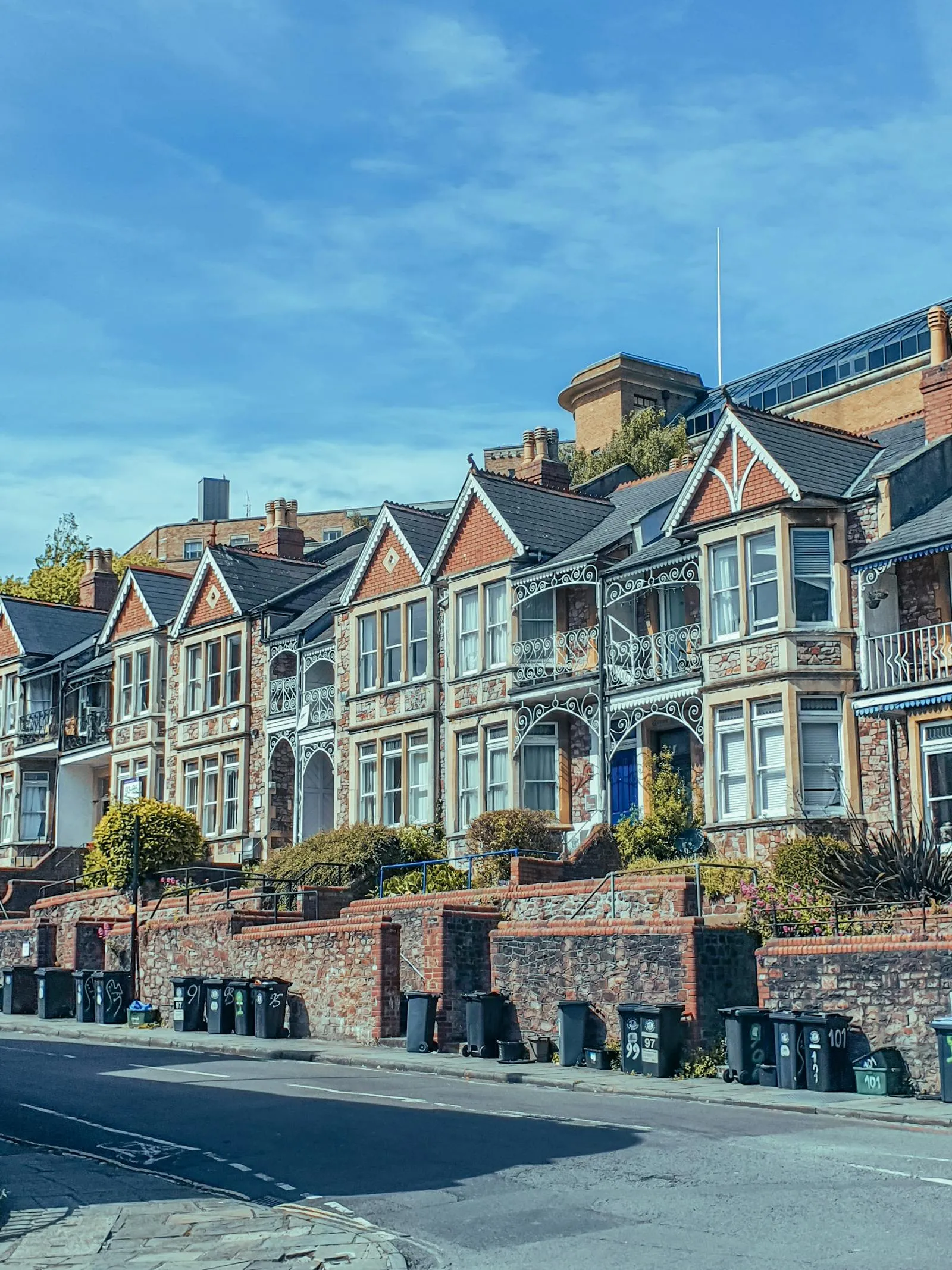
Bedminster is south Bristol's Victorian working-class neighbourhood — developed in the 1870s–1900s for the artisan and industrial workforce that powered the city's south-of-river expansion. The defining housing-stock pattern is Victorian terraced housing of the late 19th century, with a substantial 1930s red-brick interwar layer added on the area's edges. Roughly 60% of the stock is mid-to-late Victorian (1870–1910), 25% is interwar (1920s–1930s, mostly red-brick), and 15% is post-1950 infill. Construction on the Victorian stock is solid-wall brick with stone detail; the interwar additions are predominantly brick cavity-wall. The Alphaville sub-area carries the earliest Victorian terraces and is documented in the 2013 CA character appraisal.
The single biggest design factor for a heat pump installation in Bedminster is the Bedminster Conservation Area, designated on 18 February 1981 (CA25, entity 44010602). The character appraisal was adopted on 12 December 2013. Inside the boundary, external alterations to principal elevations typically need planning permission rather than relying on Permitted Development. Bedminster is among the few Bristol Conservation Areas designated specifically to protect Victorian working-class terraced housing rather than affluent suburban architecture — the streetscape character is the touchstone the conservation officer uses to assess any visible-elevation alteration.
Bedminster also carries a clearly enumerated listed-building concentration — 30 Grade II listed buildings inside the CA boundary (CA-specific, HeritageCheck registry). All are documented as Grade II; there are no Grade I or Grade II* properties within the CA. Bedminster is in fact the only Bristol Conservation Area on this site's portfolio where the CA-specific listed count is publicly enumerated and verified — most Bristol CAs only have ward-level aggregates available. Listed-building consent is the operative constraint on these properties, separately from the CA planning regime — and applies regardless of whether the proposed alteration would otherwise qualify for Permitted Development.
The practical effect on heat pump design centres on outdoor unit siting in tight terraced plots. On Bedminster's Victorian terraces, the typical solution is rear-garden or side-passage siting where the visual impact on the protected streetscape is minimised. Front-of-property or visible side-elevation siting needs to go through planning consent with Bristol City Council's conservation officer. The MCS 020(a) noise standard at the nearest residential window can be the binding constraint when the neighbouring property's window is within a few metres — typical of Victorian terraces — and careful siting plus a low-noise heat pump model is often the design solution. The consultation, where it's needed, is usually a one-meeting affair if the design is sound; the lead time is in the formal planning timeline, typically two to three weeks.
Bedminster's Victorian solid-wall stock — the brick-with-stone-detail terraced housing that defines the streetscape — predates any cavity-wall standard. That means an R290 heat pump (capable of flow temperatures up to 75°C) is typically the design choice, paired with a subset of radiator upgrades on the rooms with the largest exposed wall area. Solid-wall internal insulation is often part of the wider conversation — though the BUS grant does not fund it, so fabric improvements are usually owner-funded, or covered by the Warm Homes: Local Grant for eligible lower-income households. External insulation would breach CA controls on the streetscape-facing elevations, making internal insulation the usual route.
For the streets outside the conservation area boundary — the 1930s red-brick interwar expansion on the area's edges and the post-1950 infill — standard Permitted Development rights apply, and installations follow the routine pattern: heat-loss calculation, sizing, brand selection, outdoor unit siting against the MCS 020(a) noise standard at the nearest residential window. Most installations in this part of Bedminster take three to six days on site without the additional conservation-area design overhead.
North Street, East Street, and Asher Lane are the recognisable Bedminster features — the gentrifying high streets that have driven much of the area's recent property-price growth. Homeowners on streets close to the East Street or North Street corridor often sit inside the CA boundary and benefit most from an early conservation-officer consultation before the survey.
Heat pump help for Bedminster homes
The guides and service pages on this site apply across Bedminster. Narrow back yards behind the red-brick terraces mean a compact, quiet unit and a careful noise check. When you're ready, your enquiry goes to one local installer from our network.
- Installation: survey, design and fitting, with consent first where your home needs it.
- Servicing: a yearly check of the coil, filter, cylinder and controls, with Bristol's hard water in mind.
- Maintenance: simple upkeep, and whether a plan is worth paying for.
- Repair: checks to try first and typical repair costs.
Grants for Bedminster homeowners
The Boiler Upgrade Scheme takes £7,500 off an air source heat pump for owner-occupiers and private landlords replacing fossil-fuel or electric heating. Your MCS-certified installer applies and deducts it from the bill; there's no income test, and since 28 April 2026 no EPC is needed.
Almost every home in Bedminster is on mains gas, so the standard £7,500 is the figure that applies.
Lower-income households in privately owned homes rated EPC D to G should check the Warm Homes: Local Grant, delivered through Bristol City Leap's Bright Green Homes project, which can fund upgrades in full. More on our costs and grants page.
Estimated cost in Bedminster
Bedminster installations typically run £8,500–£12,000 before the £7,500 BUS grant — net £1,000–£4,500 — placing the area at the lower-mid end of the Bristol portfolio. Three local drivers explain the position.
Smaller terraced footprint, smaller heat pump. Bedminster's 1870s–1900s Victorian working-class terraces are the smallest period-stock footprint on this portfolio. An 8–10 kW R290 heat pump is the routine specification — modestly higher hardware cost than R32 but workable at the higher flow temperatures the solid-wall brick needs — landing the bulk of these properties at £9,500–£12,000 gross. The 1930s red-brick semis and detached homes on the area's edges come in at £8,500–£10,000 gross on cavity-wall sizing with the cheaper R32 monobloc option.
30 Grade II inside the CA — the only enumerated count. Bedminster is the one Bristol Conservation Area on this site's portfolio where the CA-specific listed-building count is publicly enumerated: 30 Grade II structures inside the 1981 CA25 boundary (HeritageCheck registry), no Grade I or Grade II* properties. The CA was designated specifically to protect Victorian working-class terraced housing — an unusual designation purpose for Bristol, which mostly protects affluent suburbs. Listed-building consent on those 30 properties carries additional design fees that move them toward the top of the cost range. Inside the CA itself, the planning consultation usually adds under £250 in council fees.
Tight terraced plots, binding noise calculation. Bedminster's defining design constraint is the proximity of neighbouring windows on Victorian terraces — outdoor unit siting in rear gardens or side passages often places the unit within a few metres of a neighbour's bay window or rear elevation. That makes the MCS 020(a) noise calculation the binding factor on more Bedminster installs than on suburban areas with larger plots. Low-noise unit models, careful siting against the prevailing fence line, and occasional acoustic screening are the standard design responses. Hot water cylinder upgrades are routine where the existing cylinder wasn't sized for heat pump duty.
After grant, net Bedminster spend sits at £1,000–£4,500. The gap to a like-for-like gas-boiler swap (£2,500–£4,500) is essentially zero at the lower end — in many cases the post-grant heat pump cost matches or undercuts a gas-boiler replacement, with the 15–20 year heat-pump lifespan (against 10–15 for gas) compounding the lifetime advantage. Request a quote for property-specific numbers; the cost drivers are in the 2026 heat pump cost guide.
Choosing an installer for a Bedminster home
Use an MCS-certified installer: it's a legal condition of the grant and of most manufacturer warranties, and it covers the noise calculation that keeps an installation within permitted development (37 dB(A) at the neighbour's nearest window). Check any company on the MCS register.
Planning matters go to Bristol City Council. Our installer guide lists the questions to ask, and our methodology explains how installers are chosen for enquiries from this site.
Heat pump installation in Bedminster — FAQ
How long does heat pump installation take in Bedminster?
Usually three to five days on site after a survey and design, and six to ten weeks overall. A Bedminster terrace typically takes four or five days, including a new cylinder if there's a combi.
Do I need planning permission for a heat pump in Bedminster?
It depends on whether the property sits inside the Bedminster Conservation Area. The CA was designated on 18 February 1981 (entity 44010602, CA25) and the character appraisal was adopted on 12 December 2013. Inside the CA, external alterations on principal elevations — including outdoor heat pump unit placement on a visible elevation — typically need planning permission rather than relying on Permitted Development. Listed buildings always need listed-building consent for external installations, regardless of PD. Outside the CA boundary — the 1930s red-brick expansion areas and post-war infill — standard PD rules apply: the 1.5 m³ outdoor unit volume threshold, the MCS 020(a) noise standard at the nearest residential window, and the standard siting clearances. Your installer can check permitted development or prepare a planning application for submission to the Bristol City Council planning portal.
Are heat pumps suitable for Bedminster Victorian terraces?
Yes — Bedminster's Victorian working-class terraces (1870s–1900s dominant) and the 1930s red-brick expansion are heat-pump-suitable with the right specification, though the design constraints differ between the two eras. Victorian terraced stock needs an R290 heat pump (capable of higher flow temperatures up to 75°C) and a subset of radiator upgrades on the rooms with the largest exposed wall area; tight terraced gardens are the most common siting constraint. 1930s red-brick semis and detached homes are usually cavity-wall construction, and the lower flow temperatures of R32 monobloc systems are workable with narrower radiator-upgrade scope. Solid-wall insulation is often part of the conversation on the Victorian stock — internal insulation is the usual route where the façade is CA-sensitive.
Am I eligible for the £7,500 BUS grant in Bedminster?
Very likely. Owner-occupiers and private landlords replacing gas, oil, LPG or electric heating qualify for £7,500 with an MCS-certified installer, with no income test or EPC requirement.
How much does heat pump installation cost in Bedminster?
Typically £8,500–£12,000 before the grant and £1,000–£4,500 after it. The main variables are radiators, the cylinder and access; see the cost section above and our Bristol cost guide.
What does the Bedminster Conservation Area cover?
The Bedminster Conservation Area was designated on 18 February 1981 and the character appraisal — adopted on 12 December 2013 — covers the area's Victorian working-class terraced streetscape, including the Alphaville sub-area noted for its pre-to-mid Victorian terraces. The CA-specific listed-building count is 30 Grade II structures (HeritageCheck registry) — there are no Grade I or Grade II* properties inside the CA. The CA's purpose is to preserve the Victorian working-class terraced streetscape that gives Bedminster its distinctive character — an unusual designation in that most Bristol CAs protect affluent suburbs rather than working-class housing. The practical effect on heat pump installation is the same as any CA: principal-elevation alterations need planning consent rather than relying on PD.
How does outdoor unit siting work inside the Bedminster Conservation Area?
Inside the CA, outdoor unit placement on principal elevations — front-of-property or visible side-elevations — typically needs planning consent rather than relying on Permitted Development. The standard solution for Bedminster's terraced stock is rear-garden or side-passage siting where the visual impact on the protected streetscape is minimised. Tight terraced gardens are the most common siting constraint — the MCS 020(a) noise standard at the nearest residential window can be the binding factor when the neighbouring property's window is within a few metres. Bristol City Council's conservation officer is the early-consultation contact; the consultation is usually a one-meeting affair if the design is sound. Listed buildings need listed-building consent regardless of siting choice.
Will I need new radiators with a heat pump in a Bedminster terrace?
Probably some. Heat pumps run radiators cooler than a gas boiler, so rooms that lose the most heat need larger ones. The front room with the bay and the back bedroom over the kitchen usually need larger radiators.
Get a Bedminster heat pump quote
Submit the form on the homepage with your BS3 postcode and a note about your property. We'll route the enquiry to an installer in our network whose coverage of Bedminster and brand portfolio fit. The survey is free; the written quote shows the actual figure you'd pay after the £7,500 BUS grant has been deducted, with any required radiator upgrades or hot water cylinder costs included.
Nearby Bristol-area neighbourhoods
- Clifton Georgian terraces and Victorian townhouses (BS8) within Clifton CA (1972) — Bristol's premier heritage suburb.
- Redland Late Victorian and Edwardian villas (BS6) in the shared Cotham & Redland CA (1981) — leafy lower-density inner-north.
- Cotham Dense Victorian urban townscape (BS6) sharing the 1981 CA with Redland — 144 ward-level listed buildings.
- Westbury-on-Trym Medieval village core plus 1920s–1930s suburban semis (BS9/BS10) — Bristol's least-deprived ward (IMD decile 10).
- Sneyd Park Affluent Victorian and Edwardian villa estates (BS9) with Arts & Crafts heritage in the 1981 CA.
- Thornbury Historic South Gloucestershire market town (BS35) — Tudor castle, three CA designations (1975/1984/2000).
- Long Ashton Affluent North Somerset commuter village (BS41) — 80+ listed buildings, Leigh Woods Arts & Crafts enclave.
See all Bristol-area neighbourhoods we cover.