Heat Pump or New Gas Boiler? A 15-Year Ledger for a Bristol Terrace
Last reviewed: 2 October 2026
We added up every cost over fifteen years for one typical Bristol home — a three-bedroom Victorian terrace in Bishopston — once with a new gas boiler and once with a heat pump. The ledger, the assumptions and what could change the result.
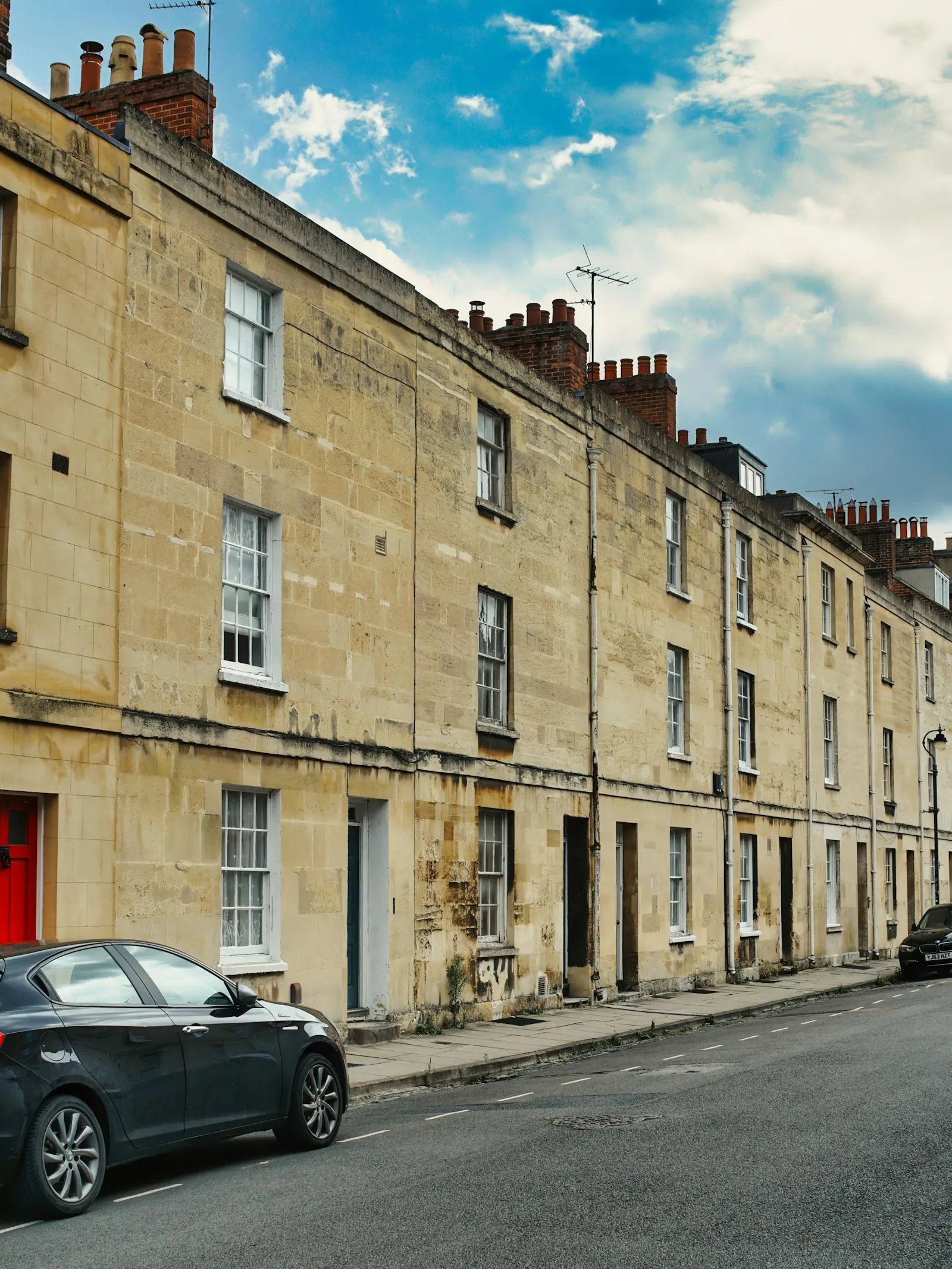
The house
A three-bedroom Victorian brick terrace in Bishopston: solid walls, a loft with some insulation, double glazing, and a 15-year-old gas combi boiler that has started to fail. It needs about 12,500 kWh of heat a year for heating and hot water.
The owner has two choices: replace the combi with a new gas boiler, or switch to an air source heat pump.
The assumptions
- Energy prices stay at the October 2026 price cap for all fifteen years: electricity about 26p per kWh, gas about 8p, gas standing charge about £108 a year. Real prices will move; we test that below.
- Gas boiler: 90% efficient, £3,500 installed, serviced every year for about £100.
- Heat pump: seasonal efficiency of 3.4 (achievable in Bristol’s mild climate with good design), £12,000 installed with a cylinder and three radiator upgrades, minus the £7,500 grant = £4,500. Serviced every year for about £150.
- The electricity standing charge is paid in both cases, so it’s left out.
- No discounting of future money, to keep it readable.
The 15-year ledger
| New gas boiler | Heat pump, standard tariff | Heat pump, heat pump tariff (~18p) | |
|---|---|---|---|
| Installation | £3,500 | £4,500 | £4,500 |
| Fuel, 15 years | £16,605 | £14,520 | £9,930 |
| Gas standing charge, 15 years | £1,620 | £0 | £0 |
| Servicing, 15 years | £1,500 | £2,250 | £2,250 |
| Total | £23,225 | £21,270 | £16,680 |
| Difference vs gas | — | £1,955 less | £6,545 less |
Over fifteen years, the heat pump comes out ahead even on a standard tariff, and well ahead on a heat pump tariff. Notice how small installation is compared with fuel: the choice of system matters, but running costs dominate.
What the ledger leaves out
A second gas boiler
Gas boilers typically last 10–15 years. A heat pump typically lasts 15–20. There’s a fair chance the gas option needs another boiler before the fifteen years are up, which would add £3,000 or more to that column.
Repairs
Both systems need occasional repairs. Heat pumps have fewer combustion-related parts but more electronics. We’ve assumed repair costs are similar.
The cylinder
The heat pump needs a hot water cylinder; the combi doesn’t. In a Bristol terrace, giving up a cupboard is a real cost in space, even if not in money.
What if prices change?
Nobody knows where energy prices will go. Here’s how the 15-year gap changes under some simple scenarios, all against the standard-tariff heat pump.
| Scenario | Gas total | Heat pump total | Heat pump advantage |
|---|---|---|---|
| Prices flat (as above) | £23,225 | £21,270 | £1,955 |
| Gas 20% dearer, electricity flat | £26,546 | £21,270 | £5,276 |
| Electricity 20% dearer, gas flat | £23,225 | £24,174 | −£949 |
| Both 20% dearer | £26,546 | £24,174 | £2,372 |
The heat pump only falls behind if electricity rises while gas doesn’t, and only on a standard tariff. The government has said it wants to move policy costs off electricity bills over time, which would push in the heat pump’s favour, but we haven’t counted on it.
Why Bristol homes do well in this comparison
- Mild winters. Filton averages around 33 frost days a year, so a heat pump in Bristol spends more of the winter at good efficiency than one in the East or North.
- The grant covers a large share of a typical Bristol installation, keeping the upfront gap with a gas boiler small.
- Off-gas homes do even better. Properties on oil or LPG around Long Ashton and Thornbury get £9,000 rather than £7,500 (applications 21 July 2026 – 31 March 2027), and oil and LPG typically cost more to run than mains gas.
Where Bristol homes do less well is in the older solid-walled stone houses of Clifton and Cotham, which need more heat whatever system heats them. A heat pump still wins over time, but the margin is thinner unless draught-proofing and loft insulation are tackled too.
Beyond money
- No combustion in the house, so no carbon monoxide risk and no annual gas safety check if you remove the gas supply
- Much lower carbon emissions, falling further as the grid decarbonises
- Steady, even warmth rather than short bursts of heat
- Future-proofing, as gas boilers are phased out of new homes
For the upfront picture, see heat pump costs in Bristol. For year-by-year savings, see the running cost guide.
See what a heat pump would look like in your Bristol home
The mechanism is the same in every UK home; the design is specific to yours. Our team carries out a free in-home survey including a full room-by-room heat-loss calculation, identifies the system size and configuration that fits your property, and provides a written quote with the £7,500 BUS grant already deducted.
You'll see the actual figure you'd pay — not an estimate — and the projected efficiency for your specific install.